

For many individuals, facial dysphoria is one of the areas where body dysphoria is most intensely experienced. The face is an important element that determines how we establish our identity in social life. It reflects everything about us, from our gender to our emotions, and connects us to the outside world.
Für MTF individuals, facial perception and the face’s impact on identity are even more significant. For many MTF individuals, discomfort with their appearance is often not only physical but also a social experience. Therefore, facial dysphoria can become one of the most intense areas of body dysphoria for many MTF individuals. Even small details encountered in daily life, such as the way people look at you, address you, or interact with you socially, can directly affect your perception of your face.
What is Facial Dysphoria?
Facial dysphoria is the feeling of a mismatch between a person’s internal Geschlechtsidentität and the perception their face creates in the outside world. When there is a gap between the expression seen in the mirror and the identity felt, this situation can eventually turn into discomfort, unease, or alienation.
Especially for MTF individuals, this experience is not merely about aesthetics; it is directly linked to issues such as social acceptance, visibility, and self-expression. This often takes precedence over aesthetic concerns but also stands out as an interconnected issue. For some, this situation is only noticeable in photographs, while for others, it can become a source of stress permeating every moment of daily life. Some individuals may even shy away from socializing and become almost unable to live their lives.
For example, fear of being addressed incorrectly in social situations, anxiety that the face will look harsh without makeup, or constant avoidance behavior are some of the reflections of facial dysphoria in daily life. This often forces MTF individuals to mask themselves.
Why is Facial Dysphoria More Pronounced in MTF Individuals?
The face is one of the most defining elements in social gender perception. People often assess a person’s gender at first glance based on their facial features. Therefore, the overall expression of the face plays an important role in social interactions. Structural features such as jawline prominence, forehead protrusion, brow bone structure, or lower face width can cause the face to be perceived as more masculine or feminin.
How Do Facial Features Affect Dysphoria in MTF Individuals?
The source of facial dysphoria in MTF individuals is often related to the bone structure that determines the overall expression of the face. Certain facial features, in particular, can cause the face to be perceived as more severe or masculine:
- Jawline: A wide or angular lower jaw can create a more severe expression in the lower part of the face.
- Forehead Prominence: Prominent bone structure in the forehead area can create a more masculine appearance in the upper part of the face.
- Brow Bone: A brow bone that protrudes forward can cause the eye area to appear deeper and more severe.
These structural features cannot always be balanced with superficial changes such as makeup or hairstyle and can lead to more intense facial dysphoria in some MTF individuals. Most MTF individuals seek support from facial feminization surgery (FFS) as part of their gender transition. FFS provides more effective, noticeable, and lasting results at this point.
Can Structural Factors Be Changed?
Undoubtedly, the greatest impact of facial dysphoria in MTF individuals is that it makes it difficult to socialize and maintain self-confidence. At this point, many MTF individuals seek solutions to make their faces weiblicher. They turn to various areas, from makeup to skin care, hair styling to facial feminization. This wide range of solutions allows MTF individuals to express themselves as they wish in society.
The focus is mostly on skin care, makeup, or hairstyle to soften facial expressions. This is because these methods are accessible and practical. However, in terms of permanence and effective results, they remain limited for MTF individuals. Ultimately, the choice of method is proportional to the individual’s expectations and possibilities.
For example, while style or makeup changes in appearance may be sufficient for some individuals, for others, the structural elements that define facial expression may be more decisive. In such cases, it may be necessary to address facial dysphoria not only with superficial applications but also with more comprehensive planning.
Facial feminization surgery (FFS) can come into play at this point as a surgical approach that aims to achieve a more harmonious expression by reassessing the overall proportions of the face. Especially in cases where facial dysphoria is intensely experienced, reshaping areas such as the lower face contour, forehead structure, or jawline can help reduce the gap between the person’s reflection in the mirror and their internal identity.
When properly planned, FFS can be considered not only an aesthetic change but also a step that strengthens the harmony between social perception and personal experience.
How Does Social Perception Affect Facial Dysphoria?
The intensity of facial dysphoria is not solely related to the image in the mirror; social feedback also shapes this experience. The looks encountered in social life, the forms of address used, or the reactions to photos shared on social media can directly affect a person’s perception of themselves.
For MTF individuals, this situation can lead to a more intense feeling of the difference between their internal identity and their outward appearance. The fact that the same makeup techniques produce different results on different faces can make this mismatch more apparent. While makeup or hairstyle changes may significantly soften facial expressions in some people, the same techniques may not produce the desired effect in others.
Some MTF individuals may avoid being photographed from certain angles or feel uncomfortable going out without makeup. Over time, this can lead to withdrawal from social settings or changes in how they express themselves. In particular, the feeling that the overall expression of the face is perceived as harsh or masculine can intensify the experience of dysphoria.
What Can Be Done to Cope with Facial Dysphoria?
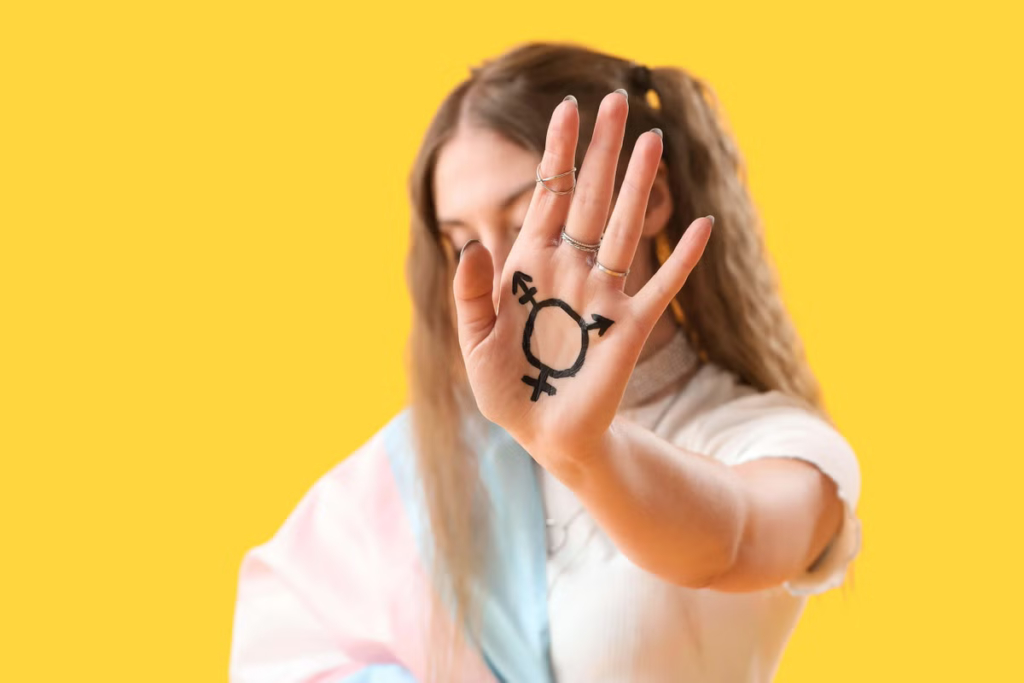
Different approaches can be preferred to cope with facial dysphoria. Methods such as makeup techniques, hair style changes, eyebrow reshaping, or style consulting can positively affect the overall perception of the face. Such practices may be sufficient for some individuals and can contribute to a softer facial expression.
Psychological support can also play an important role in this process. Addressing concerns related to social perception, in particular, can help strengthen a person’s self-image. However, it should be remembered that facial dysphoria is experienced at different levels by each individual. At the end of the day, choosing to be yourself and living as yourself is a priceless feeling.
Feminizator.com ist eine Website, die glaubt, dass Weiblichkeit ist ein buntes Universum. Hier gibt es keine starren Definitionen oder abgedroschenen Stereotypen über Weiblichkeit. Stattdessen feiern wir ein lebendiges Spektrum mit all der Komplexität, Kraft und Freude, „es“ zu sein. Jeden Tag tauchen wir in die facettenreiche Welt der Weiblichkeit ein. Wir erforschen Themen wie innere Stärke, kreativen Ausdruck, bewusstes Leben und globale Perspektiven. Wir umarmen auch LGBT+ und Transgender-Menschen und zeigen ihnen verschiedene Möglichkeiten, weiblich zu sein. Wir sind hier, um Sie zu bestärken, Ihre Weiblichkeit anzunehmen, Ihre eigene Geschichte zu besitzen und zur besten Version Ihrer selbst zu werden. Willkommen bei Feminisator. Willkommen in deinem Element.

 German
  English
  French
  Italian
  Arabic
  Russian